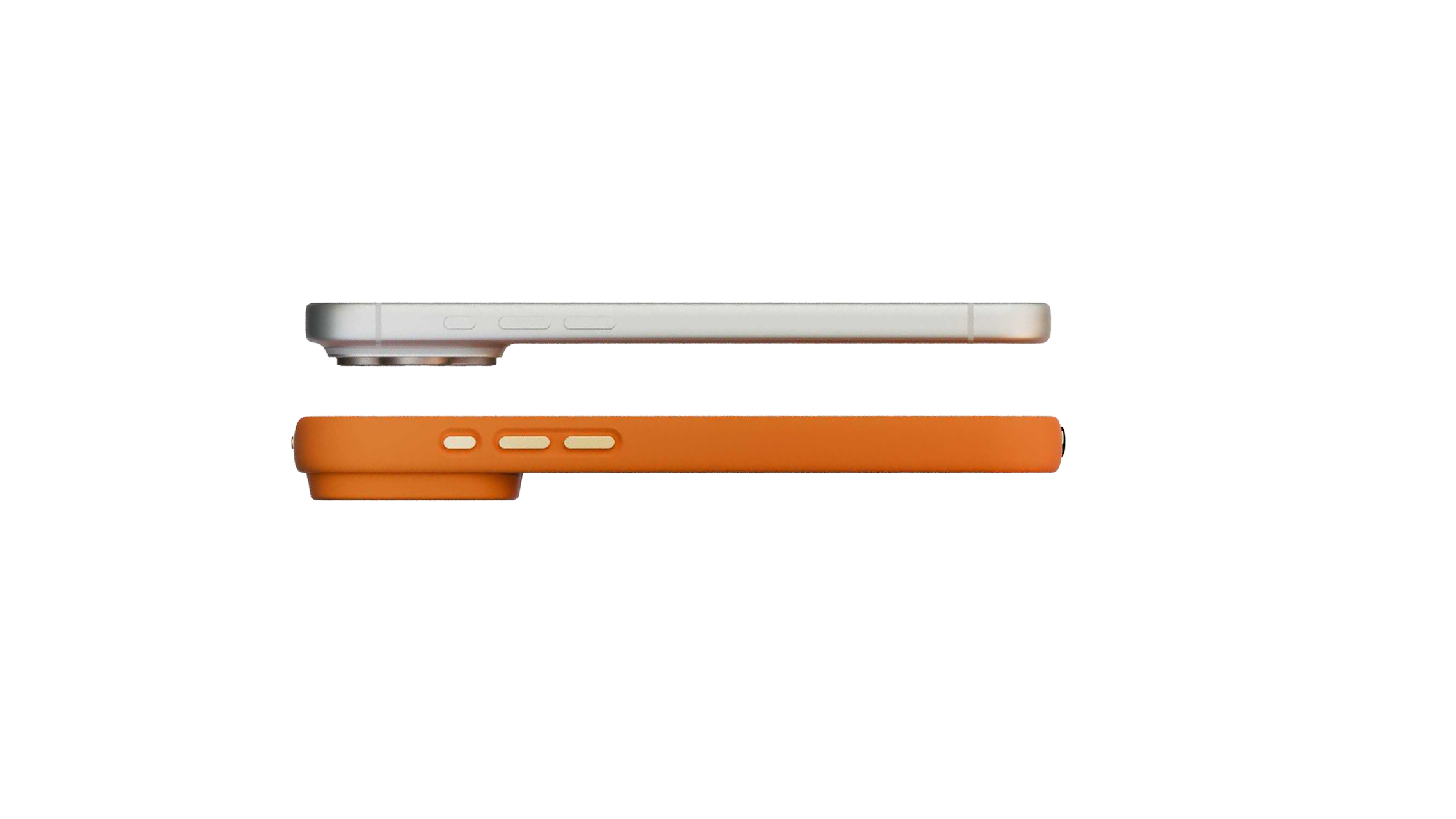
From the outside, VibeSay looks like an orange phone case with a few extra buttons. The more interesting part is what sits beneath that surface.
We’re fitting a printed circuit board, dedicated microphones, and physical voice controls into something you already carry with your iPhone. Here’s a closer look at how those parts come together.
A small space with a purpose
The camera area already shapes the back of a phone case. It needs openings for the lenses and a raised edge around them. For VibeSay, this area also provides a place for the electronics behind the voice experience.
We fit an entire printed circuit board, or PCB, into 3.7 mm around the camera area. This refers to the hardware space in that area; it is not the total thickness of the phone and case.
The number matters because of what it makes room for. Our aim is to bring useful voice hardware into the case without adding another separate device to your day.
Around the cameras
A PCB connects the electronic components that make a device work. In VibeSay, its shape follows the available space around the camera assembly, with openings that leave the lenses and other camera elements clear.

This view makes the packaging easier to understand: the electronics occupy the space around the cameras, and the connection continues down the back. Each part has to fit into the same physical product you hold in your hand.
Connecting the hardware
The board is only one part of the design. Buttons, microphones, and the phone connection need to work together to turn a physical action into something useful in the app.
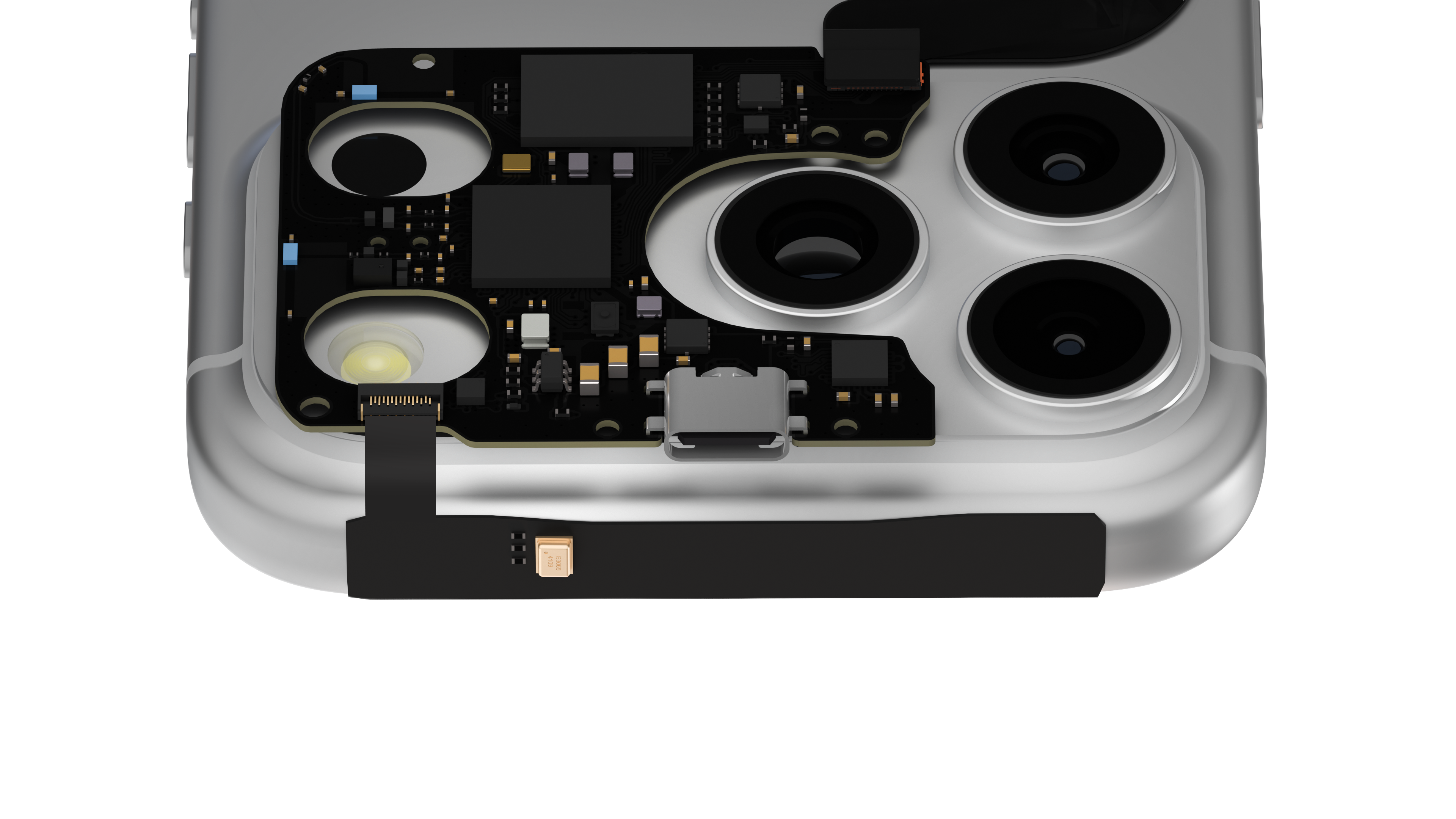
VibeSay’s dedicated microphones provide the voice input, while the case draws power from the iPhone. There is no separate accessory battery to remember to charge.
These are practical choices: the hardware stays with the phone, and the app gives your conversations, recordings, and quick thoughts a place to go.
What you use on the outside
The internal layout supports three actions you can reach from the case: AI Chat, Record, and Memo.
AI Chat launches GPT Voice Chat for a question or conversation. Record starts a longer session you can revisit in the companion app. Memo lets you press and hold to capture a quick thought, then release to save it.
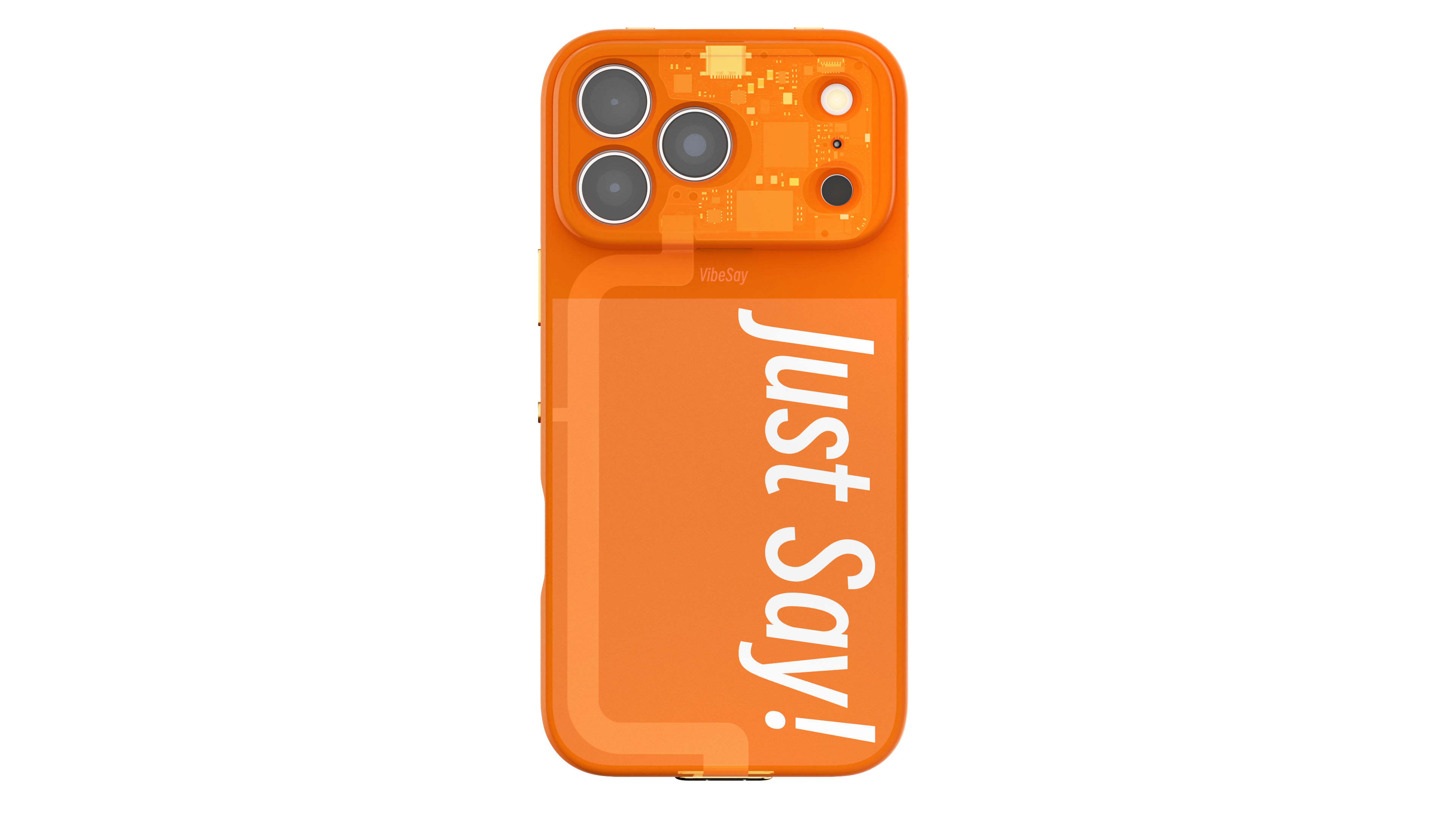
You do not need to think about the board or its connections when you use those controls. You need to know which button to reach for, what it starts, and where to find the result.
Explore the three controls and try the app demo →
Built around everyday use
Fitting electronics into a small space is part of the work. The reason for doing it is simpler: make voice easier to use in the moments when it helps.
A question can become a conversation. A longer session can become a recording to return to. A passing thought can become a saved memo. VibeSay brings the starting point for each of those moments to the phone case.
3.7 mm is the space. Easier access to your voice is the purpose.
These product renderings offer a look inside the design. We’ll continue sharing more about VibeSay and how the hardware and companion app fit together.
Take a closer look at VibeSay.
Explore the product or join our community to follow what comes next.
Explore the hardware →Join our Discord ↗