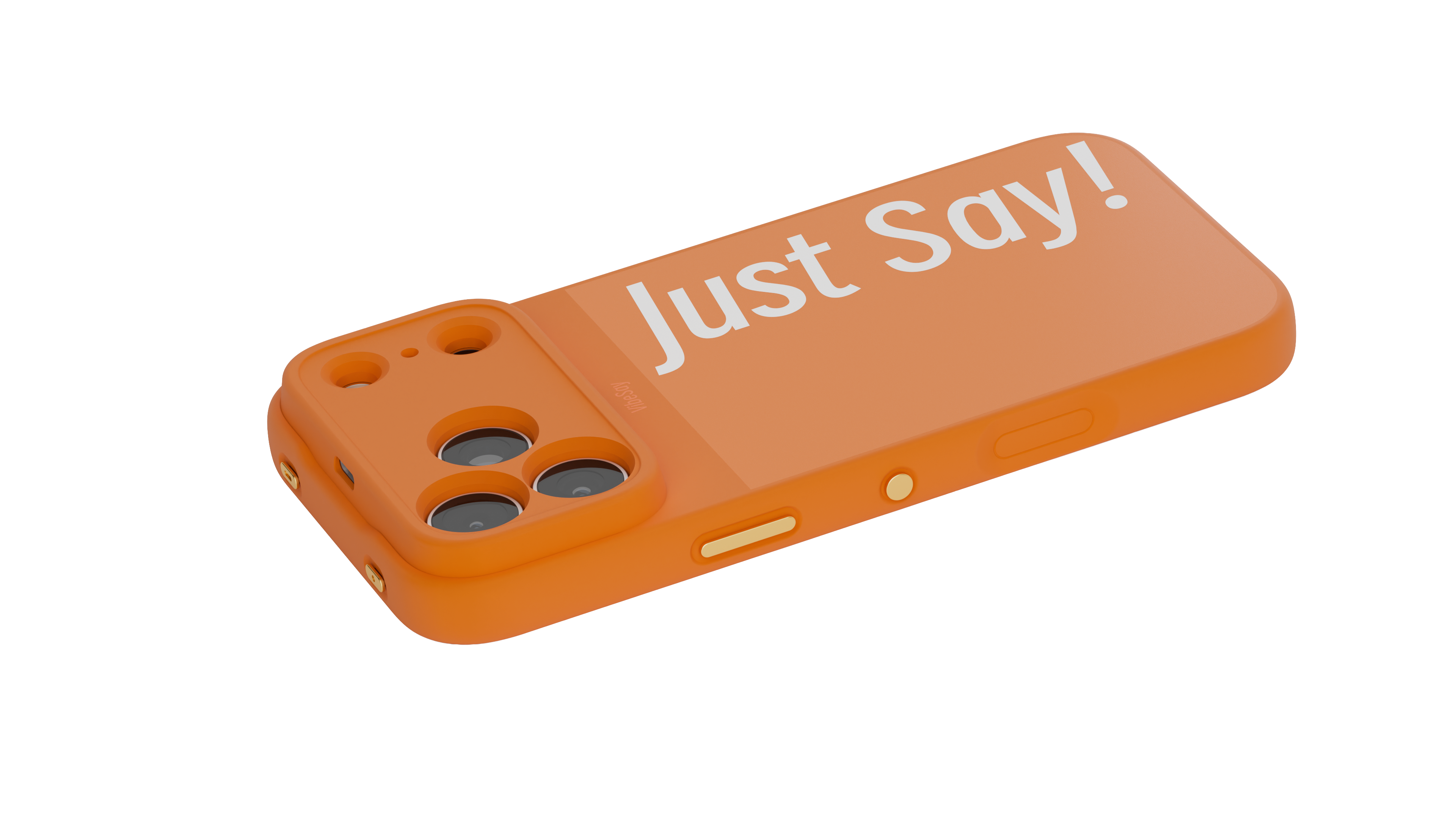
An idea arrives while you’re walking. A question comes up in the middle of a task. A conversation contains something you want to remember. These are small moments, but they are often the moments when a voice tool could be most useful.
The challenge is getting started. Reaching for your phone, finding the right app, and choosing the right action can interrupt the thought you wanted to capture.
That is where VibeSay begins: with a simpler way to reach the voice features on the iPhone you already carry.
A shorter path to your voice
We’re building an AI phone case because the case is already part of how you hold and use your phone. It is a familiar place for a physical control, close to your fingers when you need it.
Our aim is to make starting an AI conversation, recording a longer session, or saving a quick thought feel like a direct action. The case provides the controls and voice hardware; the companion app gives those actions a place to go.
A useful voice tool should be easy to reach at the moment you need it.
Three intentions, three controls
A question, a meeting, and a passing thought do not need the same kind of interaction. VibeSay gives each one its own entry point.
- AI Chat opens GPT Voice Chat for questions and conversations.
- Record is for longer sessions you want to revisit, with transcription and summaries in the companion app.
- Memo is for a quick thought you want to save before it slips away.
The distinction matters. When you reach for a control, you should already know what it will do and where to find the result later. For conversations involving other people, ask for permission before recording.
Making room for the hardware
A phone case has limited space. It still needs to fit around the phone and leave the cameras usable, while giving the electronics and physical controls room to work together.
VibeSay fits an entire printed circuit board (PCB) into 3.7 mm around the camera area. That measurement refers to the space used in this area, rather than the total thickness of the phone and case.
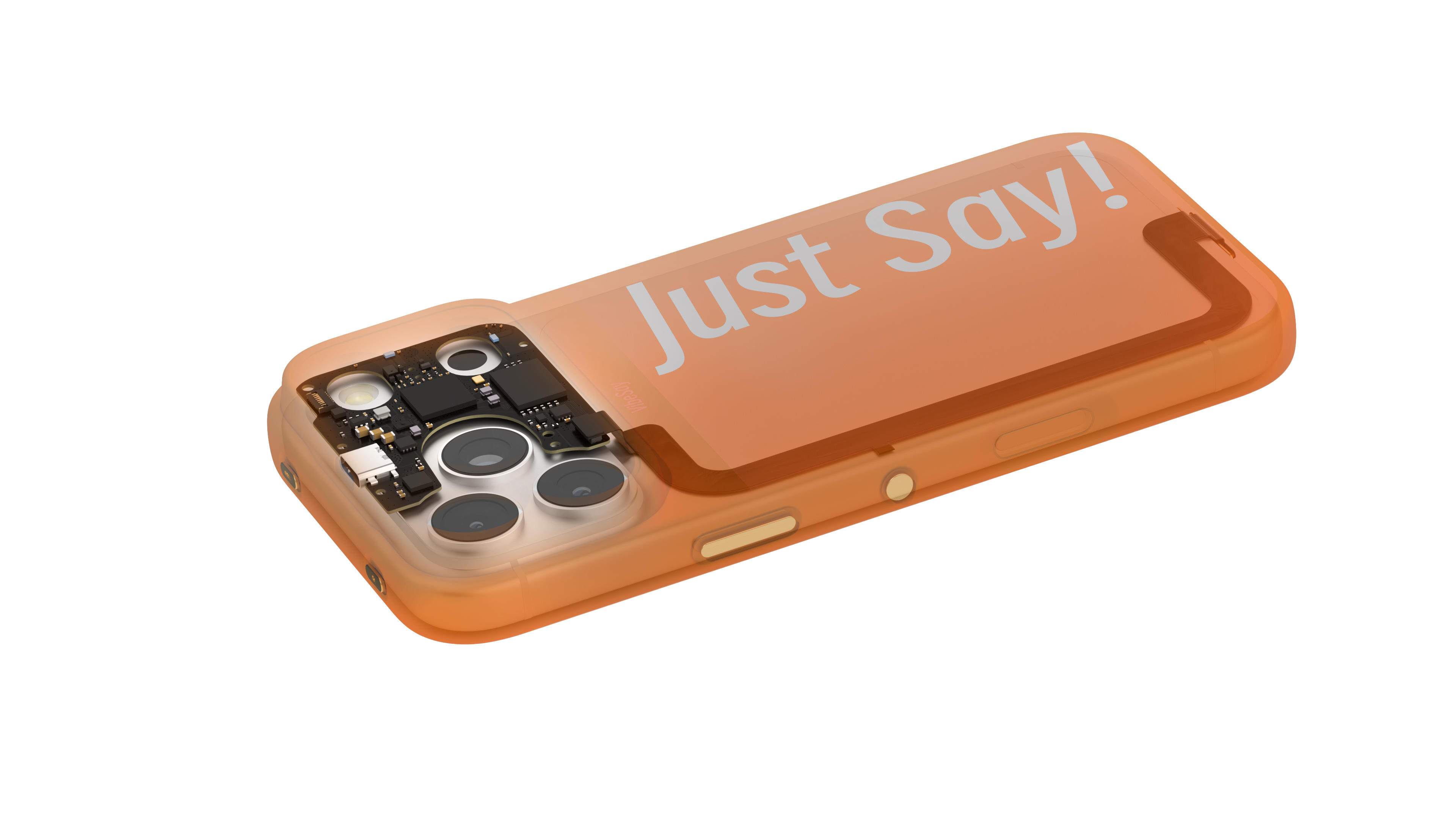
The transparent view shows the idea more clearly than the exterior alone: a case can be a home for useful hardware as well as a protective layer. Dedicated microphones and buttons connect the physical product to the voice experience.
One less thing to carry
A separate device is another object to remember, carry, and charge. We wanted VibeSay to fit into the routine people already have with their iPhone.
The case draws power from the iPhone, so there is no separate accessory battery to charge. The connection is part of the design, running through the case to bring the hardware together.
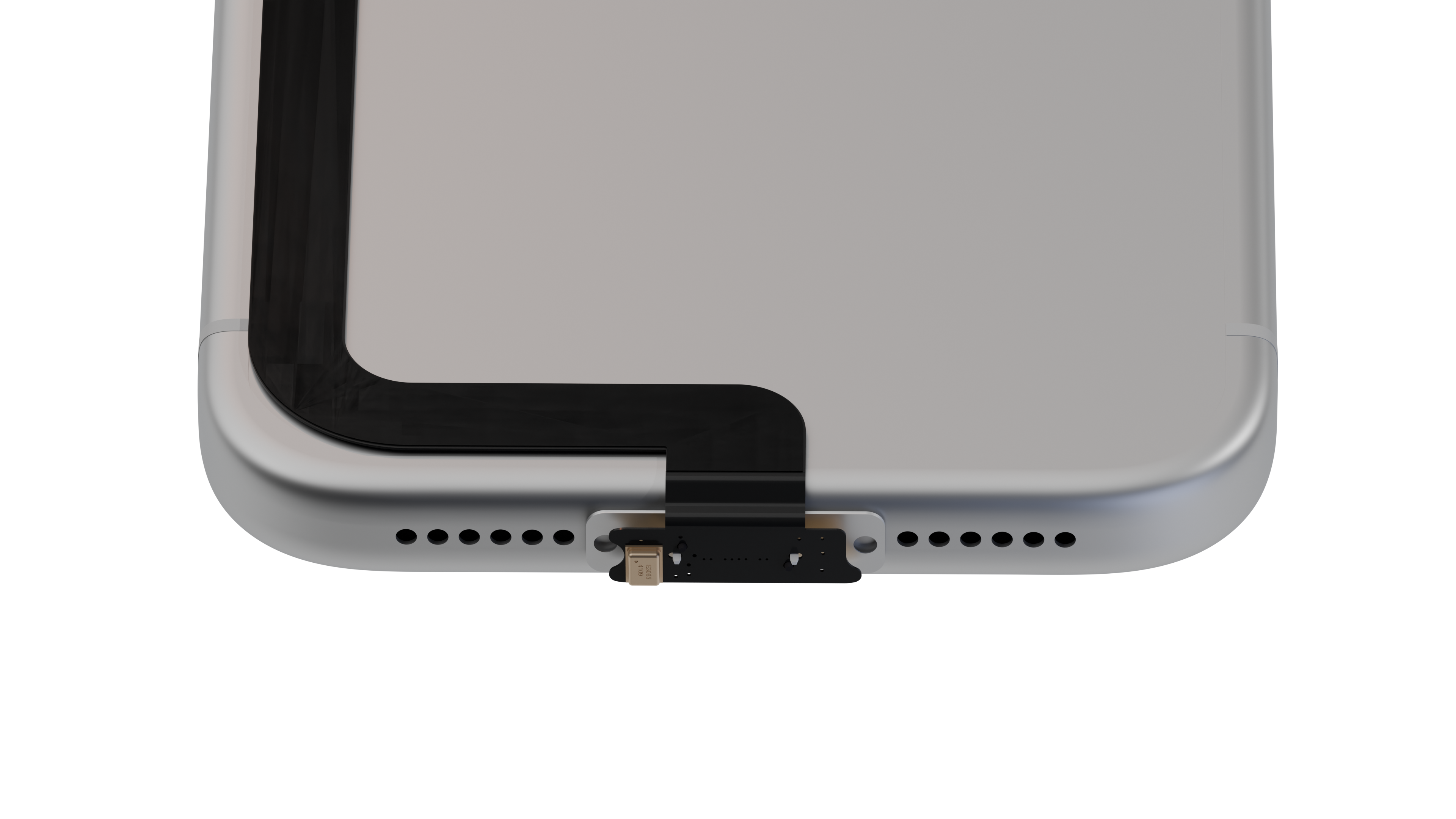
That choice keeps the focus on the experience: reach for the phone, choose the action, and speak.
What we’re building toward
VibeSay is built around a practical goal: make voice a more natural part of everyday phone use. Ask a question when it comes to mind. Save an idea while it is still clear. Return to a recording when you need its details.
We’ll use this journal to share more about the product, the design choices behind it, and how the hardware and app work together.
Follow what comes next.
Explore VibeSay or join the conversation with our community.
Explore VibeSay →Join our Discord ↗